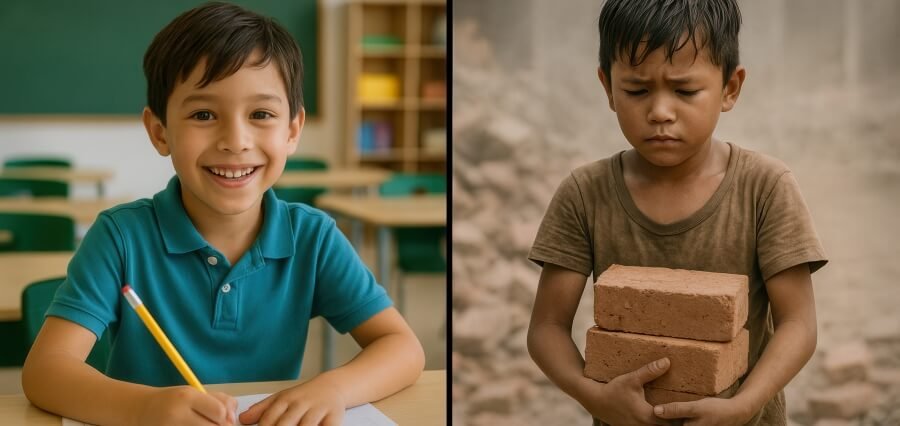
Comparative education as a field of study explores the ways that education operates throughout the world: across countries, cultures, and education systems. Nobody could claim that the world is less interconnected than it is today, and education—classrooms, education plans, and evaluations—is definitely not immune to the globalizing world around it. This study as a discipline permits educators, educational authorities, researchers, and learners to comprehend the reasons why education even operates as it does, as well as how we might expand upon the concepts and knowledge that have evolved globally.
The Concept and Scope of Comparative Education
It is important to understand that it is not simply the comparison of schools in terms of their physical structure or their assessment systems. Comparative education is an interdiscipline that draws upon sociology, economics, history, political science, and even anthropology to understand the subject within society. It can provide an understanding of essential values such as equality, merit, discipline, creativity, citizenship, among others, in terms of their manifestation in education systems.
Its scope includes formal schooling, higher education, vocational training, teacher training, as well as informal or even non-formal learning. They can look at national policies, curriculum structures, finance systems, or learner achievements, but also extend to some of the more intriguing areas as it relates to educational access, gender equity, or social inclusion, and the role of education in social mobility.
As such, it can be seen as a reflection of society or a means to change society. Historical Evolution of Comparative Education Its development and formation can be traced back to the nineteenth century, with academics and reformers seeking to learn from other foreign education systems to better their own. Initially, researchers were more interested in describing and, to some extent, borrowing from European and later American educational systems. Today, there is a shift beyond description to a more analytical approach.
In the 20th century, the field of comparison education grew significantly due to globalization, political changes due to the end of colonial rule, and the formation of new international institutions. Some of these institutions, such as UNESCO, the World Bank, and the OECD, began to undertake massive research on various educational areas such as literacy, enrollment, and educational outcomes. Recently, the field faces new challenges regarding issues such as the use of technology, migration, and sustainability.
Globalization and Comparative Education
The impact of globalization on modern comparative education has been tremendous in terms of scale and speed because it has generated a global dialogue about what education should be achieved in. The “cross-national tests and rankings, and education policies” facilitate education comparison in a much simpler manner, and comparative education helps us understand how to critique this and other similar comparisons and limitations.
Yet it also cautions policymakers against blindly borrowing a policy from another country and transplanting it to a different country without scrutinizing what makes each place different socially and culturally. Thus, through in-depth inquiry into what makes a country different socially and culturally, comparative education helps policymakers apply world best practices rather than blindly emulating them.
This is thus far one of the greatest contributions comparative education has to a rapidly interconnected world. Methods and Approaches of Comparative Education It makes use of a broad mixture of techniques, both quantitative and qualitative. For instance, data analysis can be employed to compare enrollment numbers, achievement, and education spending from country to country. Meanwhile, case studies, interviews, observation of classrooms, together with historical analysis, give insights to how education really works.
What is more, various theoretical approaches influence and define how research is undertaken in the field of comparative education, with some focusing on the functional approach, emphasizing how education propels economic development and develops a nation’s workforce, and others using a more critical approach, exploring themes of power, inequality, and the influence of global actors on national education policies. Using a mix of research and theories, the field of comparative education presents a more complex image of educational systems.
Today more than ever, the topic of comparative education matters because we live in a world where global education is being faced by common challenges such as learning deficits, a shortage of teachers, and the need to embrace the latest technology and ensure equitable and equitable education.
As one glances ahead into the potential futures of the field, one can see the importance of comparative education in the construction of educational systems that are robust, flexible, and sensitive to the varied cultures of the world in which people will be living in the years to come—the world of a far more diverse yet interconnected population. It not only enhances our perspective but also induces us to reflect critically on the educational system in our own country.