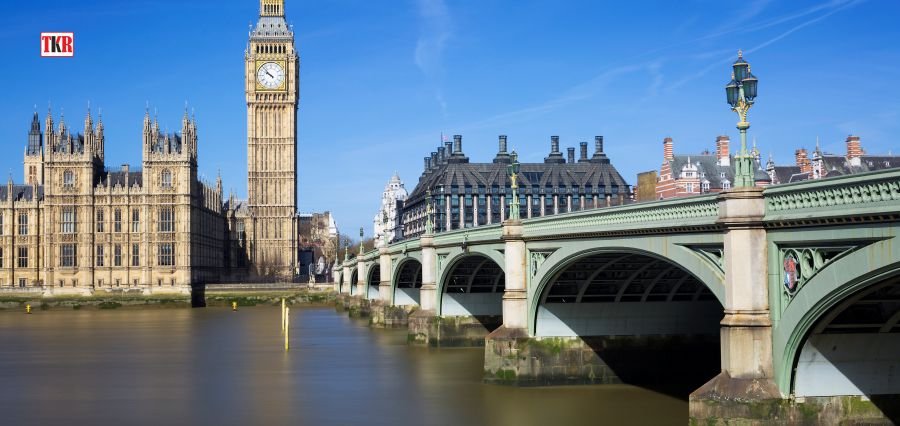
British Prime Minister Keir Starmer is confronting one of the most significant political tests of his premiership as growing unrest within his own party threatens to complicate the government’s legislative agenda and broader reform ambitions.
The tensions have emerged amid disagreements over key policy proposals, exposing divisions among Labour lawmakers less than two years after the party secured a decisive election victory. While Starmer continues to command a substantial parliamentary majority, recent criticism from members of his own party has highlighted the challenges of maintaining unity while pursuing difficult economic and social reforms.
According to reports discussed in political circles and highlighted by The Indian Express, parliamentary systems often place prime ministers in a delicate position where support from their own lawmakers is just as important as opposition challenges. Unlike presidential systems, governments in the United Kingdom depend heavily on maintaining confidence within the ruling party to ensure legislation advances smoothly through Parliament.
The latest developments have drawn attention to the mechanics of Britain’s political system, where internal rebellions can create significant obstacles even when a governing party enjoys a comfortable majority. Political analysts note that dissenting lawmakers may not necessarily seek to remove a leader but can still influence policy outcomes by pressuring governments to modify or delay controversial measures.
For Starmer, the situation represents a balancing act between maintaining party discipline and accommodating concerns from lawmakers who argue that certain policies require reconsideration.
Parliamentary Democracy Gives Lawmakers Significant Influence
The debate has also renewed interest in how the United Kingdom’s parliamentary system operates and why internal party disagreements can carry considerable political weight.
In Britain’s constitutional framework, the prime minister serves as both head of government and leader of the majority party in the House of Commons. This structure differs from systems where executive and legislative powers are more clearly separated. As a result, governments rely on continued support from their parliamentary members to pass legislation and maintain political authority.
Political observers note that large parliamentary majorities typically provide governments with substantial flexibility. However, organized resistance from members of the ruling party can still create complications, particularly when controversial legislation is involved. In some cases, sustained rebellions have forced governments to revise policies or negotiate compromises with internal critics.
The situation has become a useful case study for students of comparative politics, illustrating how parliamentary democracies function beyond election campaigns. While opposition parties remain an important part of the legislative process, many of the most consequential political battles can occur within governing parties themselves.
For Labour, the challenge is particularly notable because the party entered office with a mandate centered on economic growth, public service reform, and institutional stability. Maintaining unity around those objectives is viewed as essential to delivering on campaign promises.
As debates continue, lawmakers are expected to negotiate possible adjustments to contested proposals, demonstrating how parliamentary systems often rely on compromise and consensus-building rather than purely top-down decision-making.
The Episode Highlights Broader Questions About Leadership and Governance
Beyond the immediate political dispute, the developments underscore broader questions about leadership, accountability, and decision-making in modern democracies.
Political leaders across advanced economies increasingly face pressure from diverse factions within their own parties. Governing coalitions often include lawmakers representing different ideological perspectives, regional interests, and policy priorities. As a result, managing internal disagreements has become a central component of effective political leadership.
In Starmer‘s case, the current tensions are being closely watched because they may offer insight into how his government responds to future challenges. Supporters argue that allowing debate within the party reflects a healthy democratic process, while critics contend that visible divisions can weaken confidence in a government’s ability to implement its agenda.
The situation also illustrates the importance of parliamentary procedures that are frequently discussed in competitive examinations and political science studies. Concepts such as party discipline, confidence votes, legislative majorities, and cabinet responsibility remain fundamental to understanding how governments operate in Westminster-style democracies.
For students preparing for civil service and public policy examinations, the episode serves as a contemporary example of parliamentary governance in action. It demonstrates how political authority depends not only on electoral victories but also on the ability to maintain support among elected representatives once in office.
As the British government works to navigate internal disagreements and advance its policy priorities, the outcome may shape both the trajectory of Starmer’s leadership and the broader debate about governance in one of the world’s oldest parliamentary democracies.
Read More: India Can Earn More by Taking Its Education Global, Says Union Minister