Classes Continue Without a Permanent School Building
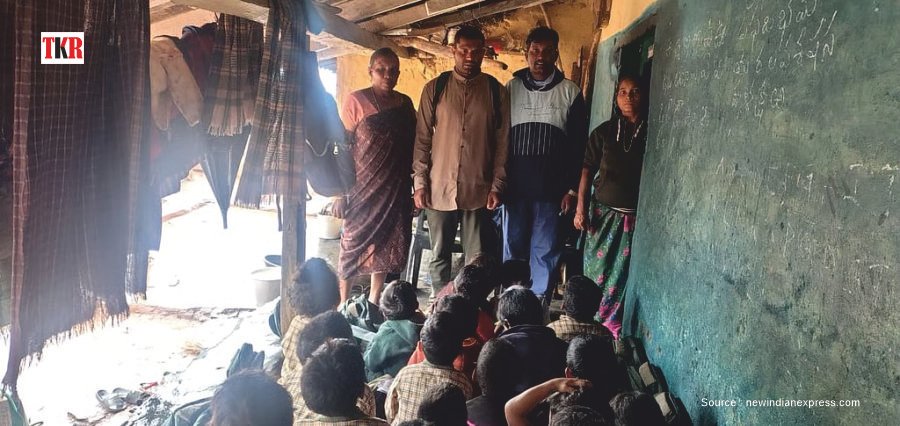
More than 55 tribal children in Gondivalasa village of Andhra Pradesh’s Alluri Sitarama Raju district are attending classes on house verandas and beneath trees, highlighting the continuing infrastructure challenges faced by students in remote tribal communities.
The village, located under Gasaba panchayat in Dumbriguda mandal, has a teacher for Classes I to VI but no functioning school building. As a result, children have been forced to use whatever space is available in the village for their daily lessons.
The absence of a permanent classroom has left students without basic facilities such as desks, chairs and a blackboard. Weather conditions further complicate the situation, with rain frequently bringing classes to a halt.
For students, the makeshift arrangements have also created difficulties in maintaining concentration. Classes held on residential verandas can be interrupted by household activities and conversations, while outdoor lessons are vulnerable to changing weather conditions.
The situation illustrates how the lack of basic educational infrastructure can directly affect the quality and continuity of learning for children living in remote areas.
Sanctioned Building Remains Caught in Funding Delay
The village has already been identified for a school building under the Nadu-Nedu programme, but the project has not progressed because the required funds were not released.
Teacher C Krishna Rao said the matter had been brought to the attention of authorities several times. An Assistant Tribal Welfare Officer also visited the village to inspect the proposed site, but construction has yet to begin.
The delay has left the school dependent on temporary arrangements despite the presence of children and teaching staff who require a suitable learning environment.
Rain is particularly disruptive. Without a proper building, even routine classes become difficult whenever weather conditions deteriorate. The lack of a blackboard and a suitable place to install one further limits the teacher’s ability to conduct lessons effectively.
For the children, the problem is not simply the absence of a physical building. The lack of a dedicated classroom also means that basic elements of a structured school environment—seating, teaching equipment, protection from weather and a quiet space for learning—remain unavailable.
The prolonged delay has consequently turned what was intended to be a temporary arrangement into an ongoing educational challenge.
Families Face Growing Pressure as Children Seek Alternatives
The shortage of facilities is also placing financial pressure on families. Some parents have chosen to send their children to private schools in neighbouring villages because they want them to receive education in a proper classroom environment.
For families already facing economic difficulties, however, private school fees can become an additional burden. What should be a basic public education service is therefore creating costs for households that may have limited financial resources.
Parents have called for the education and tribal welfare departments to intervene, monitor the school’s functioning and ensure that children can attend uninterrupted classes within the village.
The concerns extend beyond immediate infrastructure. A permanent school building would provide students with a stable learning environment and could reduce the need for families to consider private schools elsewhere.
Villagers are now seeking the completion of the long-pending building along with essential facilities such as desks, chairs and teaching equipment.
For the children of Gondivalasa, attending school currently means adjusting to available space and weather conditions rather than learning in a conventional classroom. Their situation has brought renewed attention to the gap between educational access on paper and the quality of facilities available to children in remote tribal communities.
The pending school building has therefore become more than a construction project for the village. For dozens of children, it represents the possibility of having a safe, stable and dedicated place to learn.