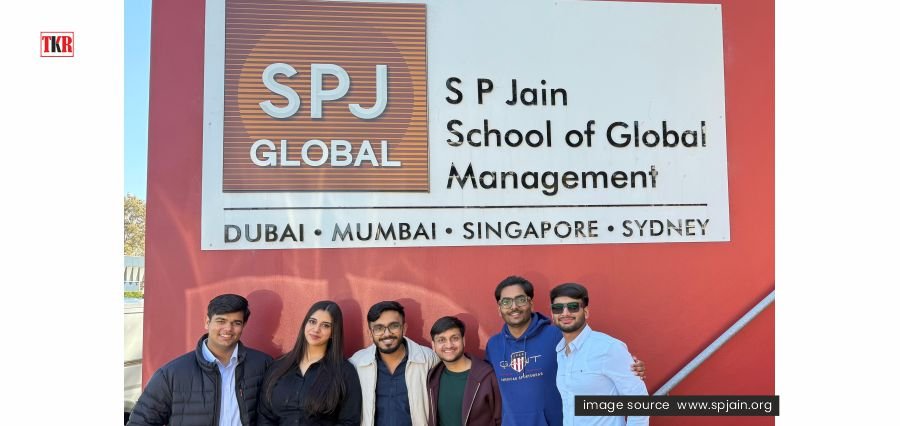
SP Jain School of Global Management has announced impressive placement results for its Master of Global Business (MGB) programme, with more than 65% of graduates securing international job opportunities and experienced professionals reporting significant salary growth following graduation.
The results highlight the growing demand for globally trained management professionals who can operate across international markets and navigate the increasing convergence of business strategy and technology. The placement outcomes also reflect the rising importance of international exposure and practical industry experience in management education.
International Exposure Drives Career Growth
According to the latest placement figures, 65.26% of graduates secured international roles across multiple regions, while 84.36% completed overseas internships during the programme. The international structure of the programme allows students to gain exposure to diverse business environments and global markets before entering the workforce.
Graduates with prior professional experience reported an average fourfold increase in earnings after completing the programme, demonstrating the growing value employers place on international business education and cross-border management capabilities. The highest compensation package reached ₹58.16 lakh, while the average package stood at ₹23.42 lakh.
The programme combines academic learning with a four-month industry internship, giving students direct exposure to business operations and practical decision-making before graduation. Institutions increasingly view experiential learning as a critical component of management education as employers seek graduates who can contribute immediately in dynamic business environments.
Technology Emerges as the Leading Hiring Sector
Technology companies accounted for 42% of placements, reflecting the rapid transformation taking place across industries as businesses integrate artificial intelligence, data analytics, and digital technologies into their operations. Financial services and manufacturing each represented 16% of placements, while consulting contributed 13%.
The hiring trends indicate growing employer demand for professionals capable of combining business expertise with technological understanding. Organizations increasingly require leaders who can manage digital transformation initiatives while operating effectively across multiple markets and cultures.
The recruiter mix included multinational corporations, consulting firms, healthcare companies, logistics providers, consumer brands, and technology businesses, highlighting the versatility of graduates with global management education backgrounds. Companies are increasingly seeking talent capable of working across international supply chains and multicultural business environments.
Global Business Education Continues to Evolve
The latest placement outcomes reflect broader shifts occurring within management education worldwide. Business schools are increasingly moving beyond traditional classroom learning and incorporating international mobility, internships, and practical industry engagement into programme design.
Global business environments are becoming more interconnected, requiring professionals who can understand regional market dynamics while maintaining a global perspective. Educational institutions are responding by creating programmes that emphasize international exposure, adaptability, and cross-cultural collaboration.
Industry experts believe demand for globally trained professionals will continue to rise as companies expand internationally and adopt increasingly digital operating models. Skills such as international business strategy, technology management, and cross-border collaboration are becoming essential for future business leaders.
The strong placement performance demonstrates the increasing importance of international business education in preparing graduates for careers that extend beyond national borders and span multiple industries. As globalization and digital transformation continue reshaping the corporate landscape, programmes offering global exposure and practical experience are expected to play an increasingly important role in developing the next generation of business leaders.
Read More: Declining Foreign Language Education in Indian Schools Raises Concerns Over Global Readiness