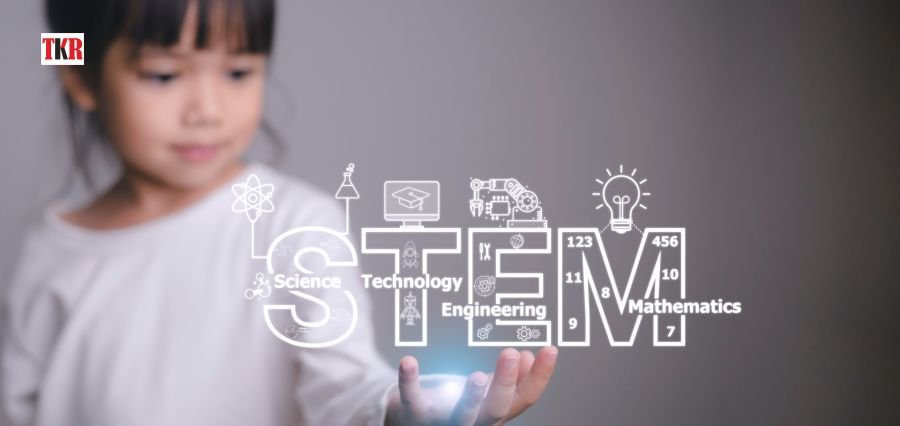
STEM education brings together science, technology, engineering, and mathematics to help students understand concepts through practical learning and problem-solving. In India, its importance is growing as schools and higher education institutions focus on innovation, digital skills, research, and employability. National initiatives such as the National Education Policy (NEP) 2020 and Atal Tinkering Labs are encouraging more hands-on and interdisciplinary learning.
What Is STEM Education?
STEM education is an interdisciplinary approach that connects science, technology, engineering, and mathematics rather than teaching them as completely separate subjects. Students learn to apply concepts to real-world problems through experiments, projects, design activities, coding, robotics, data analysis, and other practical exercises.
The approach aims to develop skills such as:
- Critical thinking and logical reasoning
- Problem-solving and decision-making
- Scientific curiosity
- Creativity and innovation
- Computational thinking
- Collaboration and communication
- Mathematical and analytical skills
- Design and engineering thinking
This makes STEM learning particularly relevant to a changing employment landscape where technical knowledge must often work alongside creativity and practical problem-solving.
Why Is STEM Education Important in India?
India has a large and diverse student population, creating an opportunity to build a strong talent pipeline for technology, engineering, research, manufacturing, healthcare, space, digital services, and emerging industries.
The importance of STEM Education in India extends beyond preparing students for traditional engineering or science careers. It can help young learners understand how technology works, evaluate information logically, design solutions, and approach everyday challenges systematically.
STEM education can also support India’s broader transition toward a knowledge-driven economy. Students who develop strong foundations in mathematics, science, digital literacy, and problem-solving can be better prepared for further education and technology-oriented careers.
How NEP 2020 Is Supporting STEM Learning
The National Education Policy 2020 places greater emphasis on multidisciplinary learning, experiential education, critical thinking, and skill development. It also recognizes the growing importance of mathematical thinking for fields such as artificial intelligence, machine learning, and data science.
The policy encourages education that moves beyond memorization and gives students greater opportunities to learn through experimentation and practical activities.
Important areas connected with this approach include:
- Experiential learning
- Coding and computational thinking
- Vocational and skill-based education
- Multidisciplinary learning
- Design thinking
- Scientific inquiry
- Technology-enabled education
- Practical problem-solving
These changes can help schools create learning environments where students understand not only what they are learning but also how and where they can apply it.
The Role of Atal Tinkering Labs
One of the most visible initiatives supporting STEM Education in India is the Atal Tinkering Lab (ATL) programme under the Atal Innovation Mission.
According to the Atal Innovation Mission, India has 10,000 ATLs across 35 states and Union Territories, covering 722 districts. More than 1.1 crore students have been actively engaged in these labs, while more than 16 lakh innovation projects have been created.
ATLs give students access to practical tools and activities involving areas such as:
- Robotics
- Electronics
- Sensors
- 3D printing
- Coding
- Physical computing
- Design thinking
- Computational thinking
The objective is not simply to teach students how to operate equipment. Students are encouraged to identify problems, develop ideas, create prototypes, test solutions, and improve their designs.
This model demonstrates how STEM can become more engaging when students move from textbooks to hands-on experimentation.
How Schools Can Improve STEM Learning
Schools do not necessarily need sophisticated laboratories to introduce meaningful STEM activities. Effective STEM learning can begin with simple experiments and projects that connect classroom concepts to everyday problems.
1. Introduce Project-Based Learning
Students can work on projects related to water conservation, renewable energy, waste management, agriculture, transportation, or household energy use.
Project-based learning encourages students to research a problem, collect information, develop a solution, and present their findings.
2. Encourage Coding and Computational Thinking
Coding can introduce students to logic, sequencing, algorithms, and problem-solving. Computational thinking does not only prepare students for software careers. It also helps them break complex problems into smaller and more manageable parts.
3. Use Robotics and Electronics
Robotics projects can combine mathematics, physics, programming, electronics, and engineering concepts. Even basic sensor-based activities can show students how theoretical concepts work in practical situations.
4. Connect STEM With Local Problems
A strong STEM Education in India model should reflect the realities students see around them.
For example, students could develop projects around:
- Water quality
- Smart irrigation
- Traffic management
- Waste segregation
- Energy conservation
- Air quality
- Rural technology
- Assistive devices
This makes learning more meaningful and demonstrates the social value of science and technology.
The Role of Teachers in STEM Education
Teachers remain central to successful STEM learning. Technology and laboratory equipment cannot replace effective teaching.
STEM educators need to move from being only information providers to becoming facilitators who encourage students to ask questions, test ideas, learn from failure, and find evidence-based solutions.
Teacher development should therefore focus on:
- Project-based teaching methods
- Digital tools
- Laboratory activities
- Computational thinking
- Assessment of practical skills
- Interdisciplinary lesson planning
- Classroom innovation
The availability of teaching resources also matters. India’s Atal Innovation Mission provides learning resources covering ideation, design thinking, computational thinking, physical computing, and digital literacy.
Challenges Facing STEM Education in India
Despite growing attention, several challenges can affect the quality and accessibility of STEM learning.
Unequal Access to Infrastructure
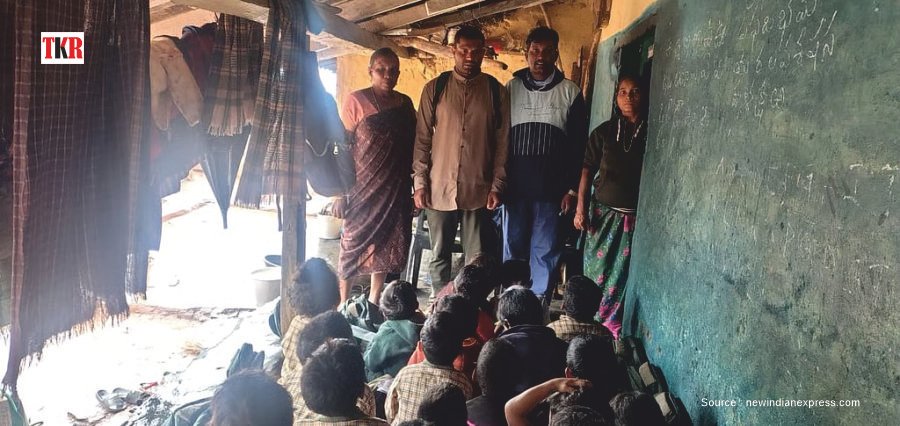
Urban and well-funded schools may have access to laboratories, computers, robotics kits, and trained teachers, while some schools face limitations in infrastructure and digital resources.
Shortage of Specialized Teachers
Effective STEM programmes require teachers who are comfortable with interdisciplinary and practical learning. Building this capacity across a large education system takes sustained investment.
Examination-Centered Learning
Students and schools may still focus heavily on examinations and memorization. This can reduce the time available for experiments, projects, exploration, and creative problem-solving.
Language and Digital Barriers
Learning resources are often concentrated in a limited number of languages. Expanding high-quality STEM content across Indian languages can make advanced concepts more accessible to a wider student population.
Gender Participation
Encouraging more girls to pursue science, engineering, mathematics, technology, and research careers remains important for building a diverse talent pipeline. Schools can support this through mentoring, exposure to STEM careers, practical activities, and visible role models.
The Future of STEM Education in India
The future of STEM Education in India will depend on how effectively schools connect foundational learning with practical skills and emerging areas of technology.
Several developments are likely to influence STEM learning in the coming years:
| Emerging Area | Potential Educational Impact |
| Robotics | Practical engineering and automation skills |
| Coding | Logical reasoning and computational thinking |
| Data Science | Analytical and statistical skills |
| Space Technology | Interest in physics, engineering, and research |
| Biotechnology | Understanding of life sciences and innovation |
| Internet of Things | Connected-device experimentation |
| 3D Printing | Product design and prototyping |
| Renewable Energy | Applied science and engineering projects |
| Design Thinking | Creativity and user-focused problem-solving |
The objective should not be to turn every student into an engineer or programmer. Instead, STEM learning can provide students with transferable skills that remain valuable across different careers.
How Parents Can Support STEM Learning
Parents can also contribute to STEM development outside the classroom. Children can learn through simple household experiments, building activities, educational games, science museums, coding platforms, books, and observation-based projects.
Parents can encourage children to ask questions rather than immediately providing answers. A child asking why a machine works, how rainwater reaches a home, or why plants grow differently can turn an everyday observation into a learning opportunity.
The focus should be on curiosity rather than creating pressure to pursue a particular career.
Building a Stronger STEM Ecosystem
India’s STEM ecosystem requires collaboration among schools, universities, government institutions, technology companies, researchers, educators, and communities.
Schools can provide foundational learning. Universities can strengthen research exposure. Companies can offer industry interaction and mentorship. Government programmes can expand infrastructure and innovation opportunities.
Atal Innovation Mission’s broader ecosystem reflects this approach by combining initiatives such as Atal Tinkering Labs, Atal Incubation Centres, community innovation programmes, and other innovation-focused programmes.
Such collaboration can help students understand the connection between classroom knowledge, research, entrepreneurship, and real-world applications.
Conclusion
STEM Education in India is becoming an important part of preparing students for a technology-driven and innovation-focused future. Its value lies not only in teaching science, technology, engineering, and mathematics but also in developing curiosity, critical thinking, creativity, and practical problem-solving.
India has already created important foundations through NEP 2020, Atal Tinkering Labs, skill-based learning, and technology-enabled education. The next step is to make high-quality STEM experiences more accessible across schools and regions.
When students are encouraged to experiment, build, question, test, and improve, education becomes more connected to the world around them. That approach can help India develop a generation that is not only ready to use future technologies but also capable of creating them.
Frequently Asked Questions
What is STEM education in India?
STEM education in India combines science, technology, engineering, and mathematics through interdisciplinary and practical learning. It emphasizes problem-solving, experimentation, innovation, and real-world applications.
Why is STEM education important for Indian students?
It develops analytical thinking, creativity, technical skills, and problem-solving abilities that can support higher education and careers across technology, engineering, research, healthcare, manufacturing, and other sectors.
What are Atal Tinkering Labs?
Atal Tinkering Labs are innovation workspaces in schools that provide students with opportunities to explore areas such as robotics, electronics, sensors, coding, 3D printing, and design thinking.
How can schools improve STEM education?
Schools can introduce project-based learning, practical experiments, coding, robotics, interdisciplinary activities, teacher training, and problem-solving projects connected to local challenges.
What skills does STEM education develop?
Key skills include critical thinking, logical reasoning, creativity, collaboration, computational thinking, scientific inquiry, design thinking, and practical problem-solving.