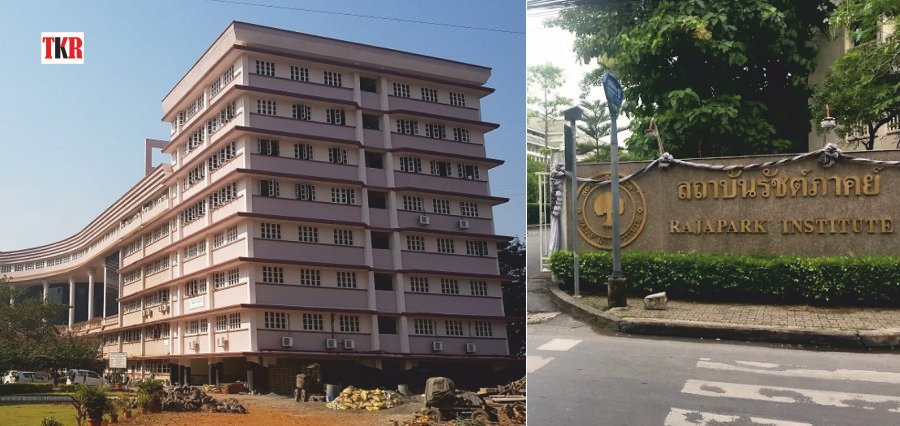
Vivekanand Education Society’s College of Arts, Science & Commerce (Autonomous), VESASC, in collaboration with Bangkok’s Rajapark Institute, hosted an international conference focused on the growing role of artificial intelligence in higher education and sustainable development.
The conference brought together academics, researchers, education professionals and students to examine how AI and emerging technologies can reshape teaching, research and institutional practices while supporting broader sustainable-development objectives.
The event reflects the rapidly changing environment in which universities are operating. Artificial intelligence is increasingly being used for research, content creation, data analysis, personalised learning and administrative functions. Meanwhile, institutions are grappling with issues such as responsible use, academic integrity, privacy, bias, and the changing role of educators.
Rather than focusing exclusively on technological capabilities, the conference placed AI within the wider context of educational transformation and sustainable development.
International Collaboration Strengthens the Discussion
The partnership between VESASC and Rajapark Institute brought an international dimension to the conference, encouraging academics from India and Thailand to exchange perspectives on the opportunities and challenges created by AI.
As artificial intelligence transforms education, international collaboration is becoming more important for universities navigating diverse cultural, economic, and regulatory settings.
For Indian institutions, discussions around AI are particularly relevant as universities implement the objectives of NEP 2020, including multidisciplinary education, technology-enabled learning and the development of skills suited to a rapidly changing economy.
Collaboration with international institutions can help universities compare approaches to AI adoption, share research and identify practices that can be adapted to local educational needs.
The Mumbai event consequently served not only as a conference on technology but also as a platform for academic cooperation and knowledge exchange.
Responsible AI Becomes Central to Educational Transformation
The rapid adoption of generative AI has created new possibilities for students and educators, but it has also introduced significant concerns.
Students can use AI tools to assist with research, writing, coding and learning. Faculty members can employ technology to develop teaching materials, analyse information and create more personalised educational experiences.
However, excessive dependence on automated tools could weaken critical thinking and independent learning if students simply accept AI-generated information without evaluating it.
Universities therefore face the challenge of establishing responsible-use frameworks that encourage innovation while maintaining academic standards.
AI policies at educational institutions need to cover key concerns, including data privacy, transparency, algorithmic bias, intellectual property, and academic integrity.
The conference’s emphasis on sustainable development adds another dimension to the discussion. AI systems require substantial computing resources and energy, while the benefits of digital transformation need to reach students and communities equitably.
Responsible AI therefore involves not only determining what technology can do, but also considering its social, educational and environmental consequences.
Technology Must Support, Not Replace, Human Education
One of the broader lessons emerging from the discussion is that AI should be treated as a tool that strengthens education rather than as a substitute for teachers and academic judgment.
Educators remain essential for mentoring students, encouraging critical thinking, providing context and helping learners develop interpersonal and professional skills.
AI can potentially reduce repetitive administrative work and provide additional learning support, allowing teachers to devote more time to higher-value educational activities.
At the same time, students need new forms of digital and AI literacy. Understanding how to formulate effective prompts is only one aspect of AI literacy. Students must also learn how to verify information, recognise hallucinations and bias, protect personal information and use AI ethically.
Universities will therefore need to rethink curricula and assessment methods as AI becomes increasingly accessible.
Building a Sustainable and Future-Ready Higher Education System
The conference highlights a wider transformation taking place across higher education.
Universities are no longer discussing AI solely as a technological development. They are increasingly considering how it affects teaching quality, research, employment, sustainability, ethics and access to education.
For institutions such as VESASC and Rajapark Institute, international academic collaboration provides an opportunity to address these questions collectively and develop approaches that can prepare students for an increasingly AI-driven economy.
The future of higher education is likely to involve closer integration between human expertise and intelligent technologies. Institutions that successfully navigate this transition will need to combine technological innovation with strong governance, ethical standards and a continued emphasis on human development.
The Mumbai conference therefore represents part of a broader movement toward understanding how AI can be used to create education systems that are not only more technologically advanced, but also inclusive, responsible and aligned with sustainable development.