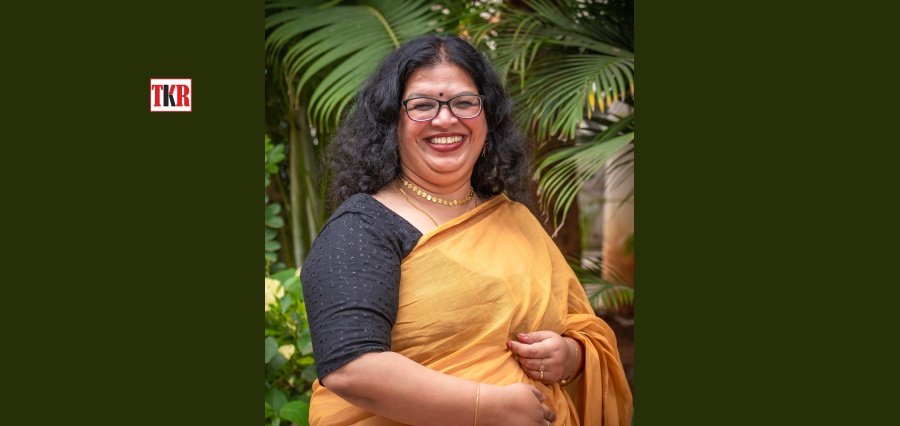
In the heart of Electronic City, Bangalore, stands ACTS Secondary School, an institution that has quietly built a reputation not only for academic performance, but for something far more meaningful: a culture of belonging, purpose, and humanity. Established in 1997, the school has grown into a learning community where children feel seen, teachers feel valued, and parents feel welcome. At the core of this shift stands Principal Ms. Deepali Dias.
Deepali’s leadership journey does not read like a traditional success story. Titles, authority, or rigid systems do not define it. Instead, it is rooted in deep empathy and in the courage to do what feels right, even when it goes against convention. What makes her different is what she chooses to feel before she acts.
The Turning Point – When Academics Were No Longer Enough
There came a moment in Deepali’s leadership journey that redefined everything. For many years, the school was driven by academic metrics. Marks were celebrated, charts were analysed, and the measure of success revolved around performance. But then, one parent-teacher interaction altered her understanding of leadership forever.
Deepali Dias recalls a conversation with a few students and their parents who were overwhelmed. Children were performing well, yet they were anxious, emotionally drained, and unsure of their own identity. In that moment, she realised that academic success without emotional support creates silent suffering. Children could win trophies, yet lose themselves.
That realisation set ACTS Secondary School on a new path.
Deepali Dias decided the school would no longer be defined by marks alone. The approach shifted toward values-driven, child-centred education. The curriculum was redesigned to integrate emotional intelligence, life skills, and real-world learning. Teachers were encouraged to look beyond test scores and recognise effort, curiosity, kindness, and grit. Parents were invited into the learning process, turning the school into a community instead of just an institution.
To strengthen learning habits and nurture a love for reading, Deepali Dias also introduced the ‘DEAR’ initiative – Drop Everything And Read – a daily practice that encourages students to pause, pick up a book, and experience the joy of reading. This simple routine has grown into a powerful culture-building exercise that improves focus, language skills, and reflective thinking across the school.
This transformation required courage. It involved retraining teachers, reimagining routines, and even facing initial resistance from families who equated excellence with marks. But Deepali Dias chose to believe in something larger. The results slowly became visible, students walked with more confidence, teachers worked with renewed energy, and parents began to lean in with trust instead of fear.
Looking back, Deepali Dias says one line that captures her philosophy –
“Leadership isn’t about control; it’s about creating conditions where everyone can thrive.”
Choosing What Matters – Beyond Trends and Buzzwords
Education today is filled with trends, new teaching models, technology-driven reforms, and frequently changing terminologies promising drastic improvements. Many institutions rush to adopt these trends because they are popular, not because they are meaningful. Deepali Dias takes a different approach.
Whenever a new reform or tool is introduced, she pauses and evaluates it against what truly matters. She asks herself whether the change aligns with the values of the school, whether there is evidence that it will positively impact learning, and whether the school can sustain it over time without losing its integrity. If a trend only creates excitement temporarily but does not help children grow as human beings, she chooses to let it pass.
For Deepali Dias , education is not a race to keep up with global trends; it is a continuous commitment to nurture curiosity, compassion, and courage. She believes that what lasts is not what is fashionable, but what is meaningful.
The Most Underestimated Challenge – Building Trust
People often assume that a Principal’s greatest challenge lies in policy, discipline, or academic planning. Deepali Dias discovered that the real challenge is far deeper: creating an atmosphere of trust.
Trust cannot be demanded. It must be earned through listening, vulnerability, and genuine connection. Deepali Dias made psychological safety the foundation of her leadership. For teachers, this meant having the freedom to innovate without fear of being judged if something didn’t go as planned. For students, it meant being encouraged to ask questions, express emotions, and take academic risks. For parents, it meant being treated as partners in the learning journey rather than outsiders.
Deepali Dias practices leadership through listening. She makes space for voices that are often unheard, the quieter teachers, anxious students, and even hesitant parents. She also leads through vulnerability and openly shares her own mistakes so people know they’re allowed to be human. When teachers see their leader owning her flaws, they feel safe enough to acknowledge their own and grow from them.
Over time, trust became the foundation on which innovation and collaboration flourished. As she reflects, “The greatest challenge in school leadership is not changing policies, but changing mindsets, and that change begins with trust.”
Unlearning Control – A New Style of Leadership
Traditional school leadership often follows a strict top-down structure, Principals instruct, teachers execute, and students follow. Deepali believes that such a model limits creativity. She believes that Principals must unlearn the mindset that leadership equals authority.
Her leadership style shifts power from the office to the entire school. Teachers become co-leaders instead of followers. Students participate in decisions that affect their learning. Parents engage as contributors, not observers. The focus moves from managing systems to building culture.
Deepali describes the shift beautifully, “To remain relevant, Principals must evolve from managers of systems to architects of culture.”
By unlearning control, she created space for collaboration, voice, and ownership.
Accountability With Heart
For many educators, accountability brings anxiety. In some environments, accountability becomes associated with monitoring, pressure, and evaluation. Deepali’s approach redefines this completely.
In her school, accountability means shared responsibility. Expectations are clearly defined, but each individual, teacher, student, and parent is trusted to find their own creative path to meet them. Instead of micromanaging, she empowers. Instead of pointing out errors, she supports growth. In her own words, “Accountability isn’t about catching people doing wrong, it’s about helping them do right, together.”
Teachers feel valued instead of scrutinised. Students feel inspired instead of pressured.
Her Proudest Achievement – A Culture of Belonging
Among every milestone and accomplishment over the years, there is one achievement Deepali holds closest to her heart: the creation of a school culture where people feel they belong.
This transformation was not the result of a grand initiative. It began with small but intentional acts. Teachers began greeting every child by name. Parents were invited to participate in small events and workshops, not just annual days or report card meetings. Students were encouraged to support one another and celebrate effort instead of perfection.
Slowly, these small actions stitched together a fabric of belonging. Children began speaking with more confidence. Teachers started supporting each other more openly and joyfully. Parents felt the school was not just a place of learning, but a second home.
Deepali says, “The true measure of leadership isn’t in awards or rankings. It’s in the quiet shift of a school becoming a home.”
Blind Spots in Indian School Leadership
Deepali has observed certain blind spots in the way schools in India are commonly led. Many school leaders become so focused on administration that they overlook instructional leadership, the heart of teaching and learning. Others cling to authority instead of embracing collaboration, assuming that control ensures quality. Teacher development is often undervalued, even though teachers are the lifeblood of any school.
Deepali believes that lasting change in schools comes from shifting focus, building vision, inspiring collaboration, and investing in teachers as lifelong learners.
Her Leadership Routines – Staying Rooted and Future-Ready
In a rapidly changing educational environment, Deepali remains grounded through personal routines that help her grow continuously. She dedicates time every day to reflect on her decisions and interactions, which helps her stay intentional rather than reactive. She creates structured opportunities for teachers to learn from one another, analyse classroom data, and explore best practices. And every day, no matter how busy her schedule becomes, she reads for at least thirty minutes to stay inspired, informed, and aware of emerging trends in education.
These routines keep her rooted and adaptable.
Guiding Philosophy – The Child Comes First
Whenever she faces a dilemma, especially one involving conflict between a policy and a student’s need, Deepali returns to one core belief: choose what nurtures the child. She reminds herself that policies exist to support learning, not restrict it. If a rule becomes a barrier to a child’s well-being, she looks for ways to uphold the spirit of the policy while adapting its implementation.
Her decisions are guided by dignity, empathy, and long-term growth.
Because to her, systems are replaceable, children are not.
The Legacy She Hopes to Leave
Looking ahead, Deepali dreams of leaving behind a legacy not defined by statistics or rankings, but by transformation. She wants ACTS Secondary School to be remembered as a place where children grew not just academically, but emotionally and socially. A place where every teacher discovered their own leadership. A place where parents felt fully involved in their children’s growth.
Her deepest hope is simple:
“Every child who walks into ACTS Secondary School feels seen, feels safe, feels home.”
She Leads Not From the Front, But From the Heart
In an education world increasingly driven by numbers, Deepali Dias stands as a reminder that schools exist to shape human beings, not just achievers. Her story proves that true leadership is not loud; it is gentle, intentional, and deeply human.
She isn’t simply leading a school.
She is shaping a generation with the courage to be kind.